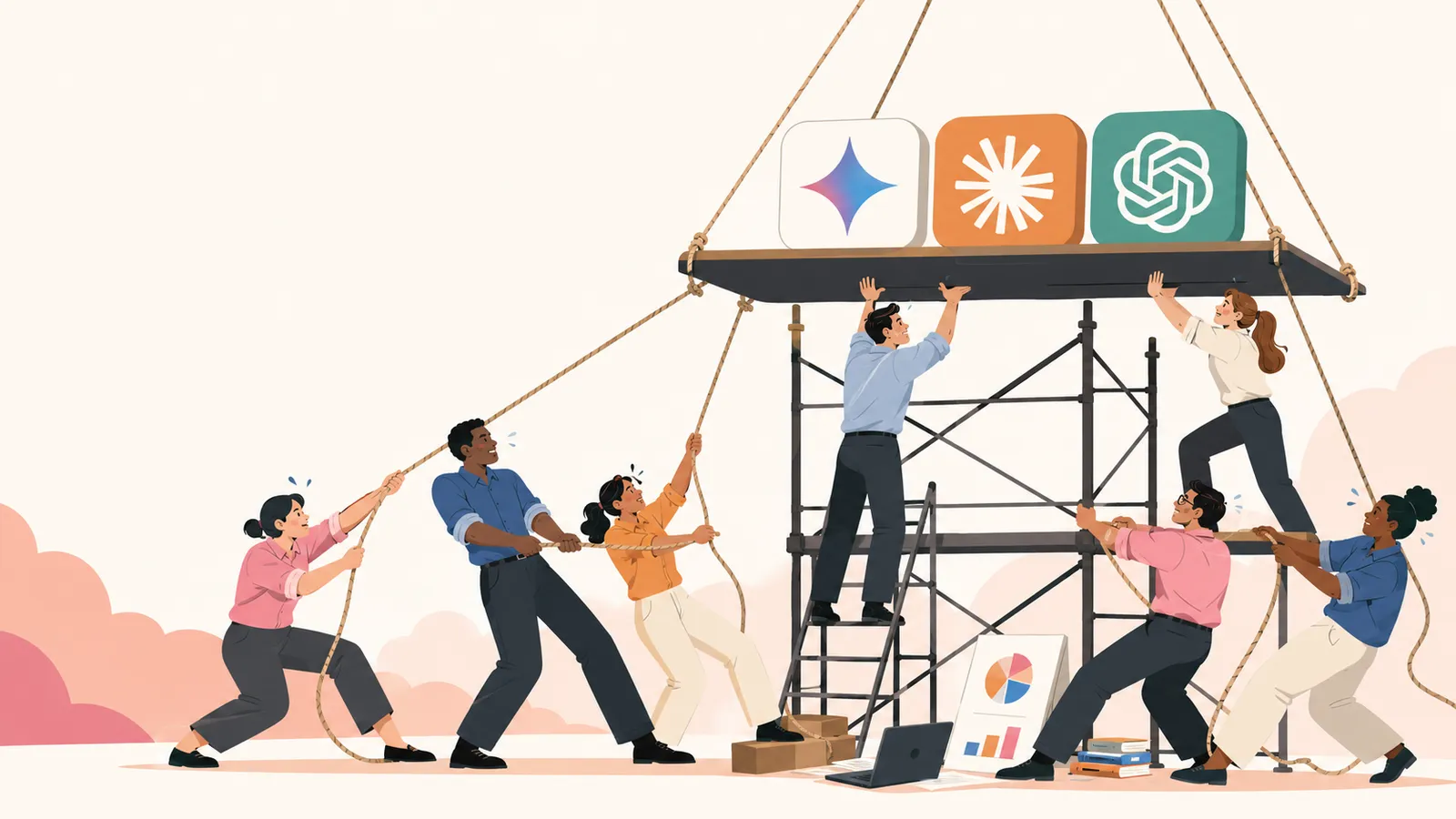
Off the back of the Mythos hiatus, Fable’s withdrawal and constrained return, and the delayed launch of GPT-5.6, an obvious question arises. What if this is about as good as AI gets for the majority of us?
Maybe this isn’t forever. But what if publicly accessible models improve only slowly through the second half of 2026 and beyond? Does AI continue to produce meaningful gains, or do we exhaust what the current generation can do?
Steve Yegge explored one version of this possibility in his “Flat Curve Society” essay and Mark Pesce touched on this topic as well recently. I’m more convinced by this argument than I would have been a few months ago, particularly given the growing appetite among governments and model companies for greater control over access and capability.
But I’ve arrived at the same question from a different direction - the ability of organisations to absorb and realise the benefits of the AI that is already available.
If we leave aside the uncertainty of model improvement for a moment, we can ask a new question.
What if accessible models are already capable enough for most commercial work, and the race has shifted from building better AI to deploying today’s AI more effectively than everyone else?
The demand horizon is already here for routine work
Yegge outlines three horizons as it relates to AI:
- The capability horizon - whether a model is capable enough to do a given task.
- The demand horizon - the types of tasks a user asks a model to do.
- The discernment horizon - how able is the user to understand the results of a model doing the task they’ve asked it to do.
For most of AI history (and especially the early period of LLMs), the capability horizon was the dominant constraint. Over the last year that has changed. Once models got capable enough, the way work was framed, decomposed, equipped and verified began to matter just as much as the base model capability itself.
We’re now at the point where most frontier models can reliably complete many of the routine work tasks we ask of them. For those tasks, a more capable and expensive model delivers diminishing returns. 1
At the same time there exists the discernment horizon (or the threshold of misplaced confidence in understanding) where the capability of the AI system easily surpasses the user’s demand - however the user’s ability to understand the resulting response or artefact is limited. Vibecoded failures by non-software engineers are an early example.
Better models and external verification systems can push the discernment horizon outward. But where neither a competent human nor a reliable system can validate the result, the organisation still cannot safely depend on it.
Right now, different domains within organisations and industries have different horizons, especially as it relates to demand.
- Software engineering is approaching the demand horizon - I routinely brief coding agents that can work autonomously for a full day with high degrees of success.
- Many routine office tasks are already there - you can see this with workers maxing their usage by asking the strongest models to do tasks when the weakest would be sufficient (eg using 4.8 Opus to summarise an email thread which Haiku 4.5 could do)
- Mathematics and science remain uneven. Formal reasoning and verifier-supported mathematics are crossing the capability horizon quickly, while open-ended discovery and poorly specified scientific work remain much more difficult to achieve results.
- Healthcare and life sciences are now on the cusp of being inside the capability horizon but often the issue is deployment and access to the other tools and data needed to make a meaningful difference not the model itself.
These horizons are not fixed. Once an AI system can do a task reliably, users rarely stop there. They ask it to work for longer, take on larger units of work and operate with less supervision. The demand horizon moves outward, and the work shifts from waiting for a smarter model to building a better system around the one already available. Engineering teams building agent harnesses are now the textbook example of this behaviour.
The bottleneck has shifted
Software development has become the poster child for process re-engineering. As soon as AI tools became good enough to write reliable code (mid 2025) and could do so at scale (late 2025) the bottleneck moved to things like review, validation and how to automate routine changes.
Software factories are the clearest example of this shift. A coding model on its own is not an autonomous engineering team. Put it inside a harness that decomposes work, provides tools and context, coordinates tasks in parallel, verifies outputs, feeds failures back into another loop and escalates judgement calls, and its effective AI system capability changes. The base model may remain static while the system around it improves.
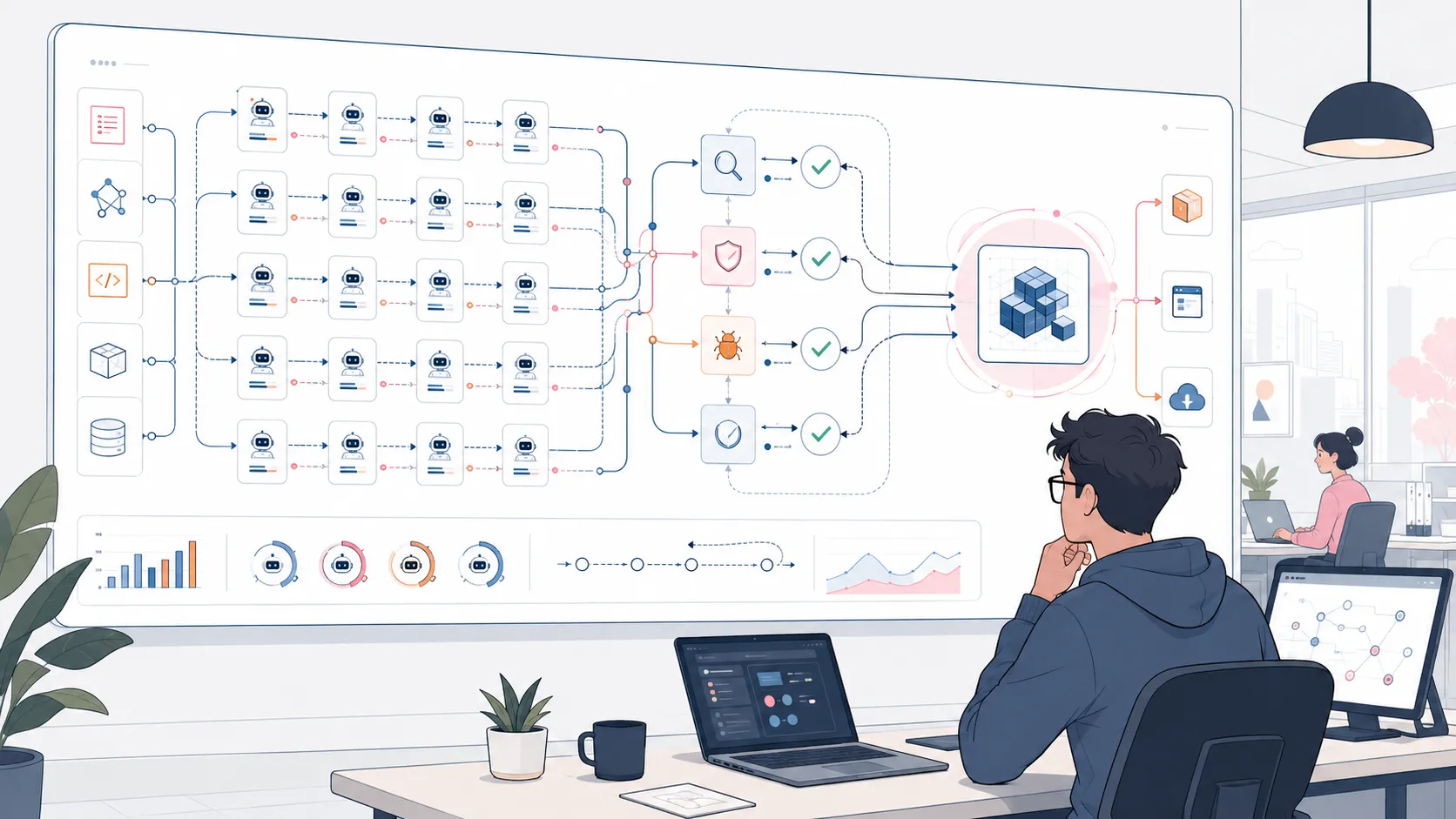 Highly leveraged software teams will be the norm. Image: ChatGPT
The recent Bun rewrite is a useful example. The outcome did not come from a single heroic prompt, but from a system of parallel agents, tests, review agents and repeated feedback loops. The model was one component of a wider production system.
As a result of these system changes, the question morphs from “Can AI do this task?” to “Can AI do this task inside our organisation?”. In many legacy enterprise businesses or large teams the answer to the second question comes with pursed lips, a sharp intake of breath and a weary, “Not without a lot of stakeholder and change management”.
The constraints on adoption and scale increasingly sit within the organisation. These include:
- enterprise data access, definition and provenance
- system access when that access is defined around human roles (and levels)
- organisational knowledge that is often locked up in tenured employees’ heads
- workflows that may be partly explicit or soft and implicit
- trust and accountability of systems and processes
- governance, policies, decision rights and delegation of authority
- the total economics of model use, integration, supervision and failure
- operational dependency on providers outside the organisation’s control
Smarter AI tools may assist with some of those points above, but only at the margins. Those areas are the messy activities of how work, decisions and capital flows through an organisation in service of its objectives. Different types of organisation are better or worse at codifying these things but few organisations are perfect, and certainly not across their entire business.
 Orchestrating and estimating work is still an art. Image: ChatGPT
Most organisations cannot yet estimate the full cost of an AI workflow: model usage, integration, supervision, exception handling, failures and the opportunity cost of human attention. Without this, it is difficult to distinguish a cute technical demonstration from an economically useful production system.
This creates a distinction between base model capability and effective AI system capability (or system capability for short). System capability combines the model with its harness, tools, memory, context, verification and workflow. Organisations do not merely absorb capability; they extend it through engineering.
At organisational scale, usefulness increasingly depends less on base model capability than on whether the wider system can understand organisational context and act within it.
This is a very different form of deployed AI from what most organisations have now.
Breadth is now more valuable than depth
Let’s say that GPT-6, Saga 7 or Gemini 4 Super Flash Pro Awesome scores 20% better on all benchmarks but costs 20-30% more than current models. Cooler heads in the Finance team are going to do some rigorous analysis on usage vs capability vs spend (some teams are already starting this in mid-2026 as a result of H1 bill shock) and they’ll find that 90% of the organisation’s tasks could be completed by the cheapest frontier models of the last generation and they’ll focus on cost optimisation 2.
If, however you said that the next model generation were instead 20% better at understanding:
- PowerPoint & Excel (or equivalents)
- ERP systems and CRM platforms
- organisational structure including practical structure as well as management structure
- internal documentation from numerous sources
- holistic project information and product / project portfolio strategy
- proprietary data sources that may be poorly defined
Many organisations would pay for that. Today.
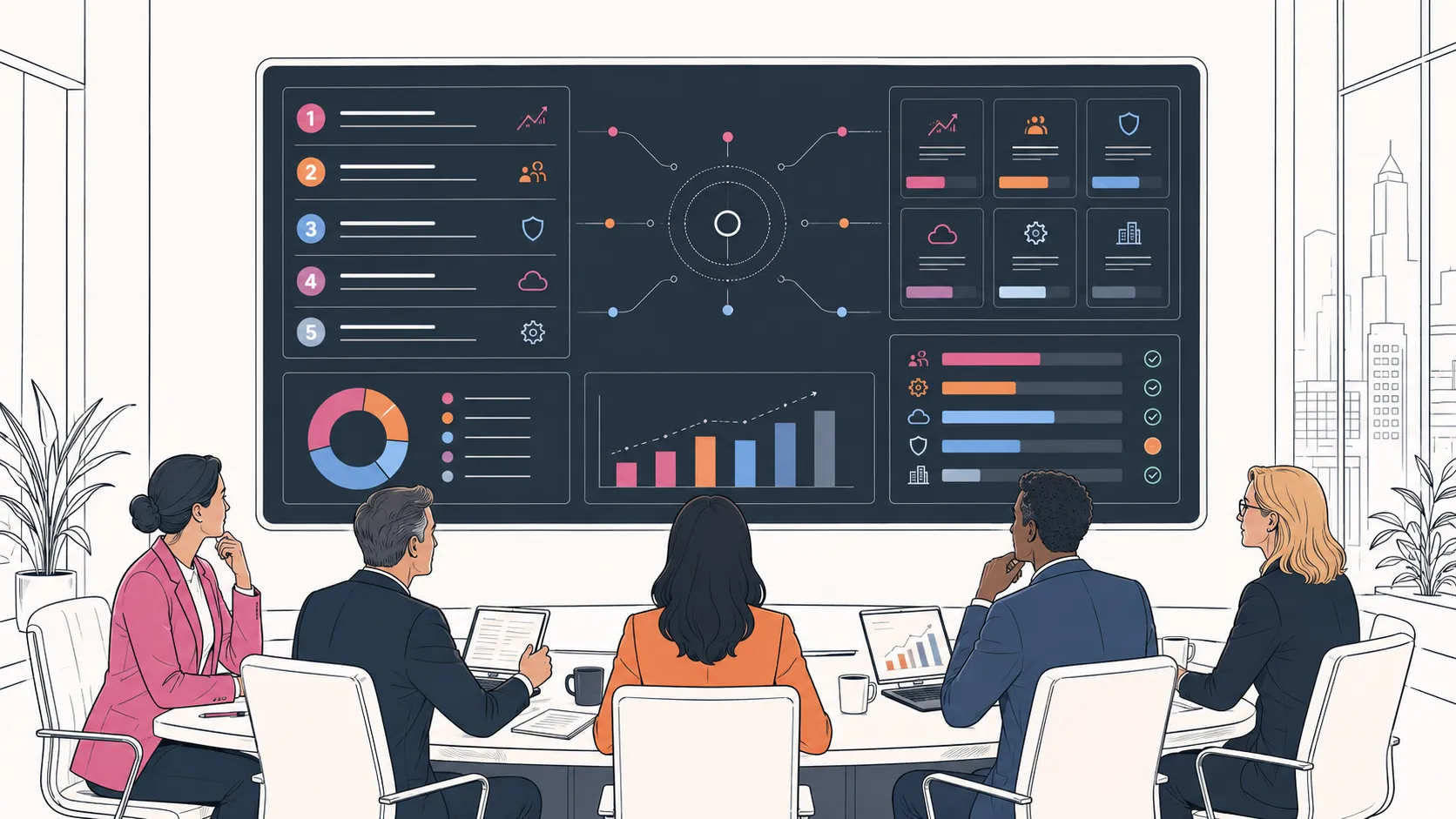 Businesses want AI to support portfolio decisions now. Image ChatGPT
Most orgs already deploying AI to their workforces are realising they have a bottleneck that base model capability alone can’t solve and are trying to work out how to make their systems, processes, org culture and data more accessible to AI tools.
Businesses can engineer this awareness and utility into their own environments now, or wait for future models to provide more of it natively. Waiting may reduce the implementation effort later, but concedes time, learning and operating experience to competitors.
AI tools that are better at integration, context, domain knowledge, that make it easier to apply ML, advanced analytics and decision support, or can work across data sets easily, would create significantly more value to organisations at this point than simply smarter models.
Foundation model companies can’t do this alone
Model companies can provide the primitives for system capability such as models, agent runtimes, memory and evaluation tooling. But the harness that matters is usually specific to the organisation, its domain and its tolerance for risk. Model providers can’t restructure the organisation, connect every internal system, redesign workflows, document tribal knowledge or decide where accountability sits. This is where organisations unlock most of the remaining value.
Yes, AI can assist these tasks and make the process of achieving them easier. But even MS Copilot (the most incapable of enterprise deployed AI tools) can assist on this front today.
OpenAI and Anthropic have both spun out consulting groups to help organisations use AI to do the messy stuff that a model can’t do. This is a play straight out of Salesforce, AWS and Adobe’s book where increased adoption is driven by organisational transformation support.
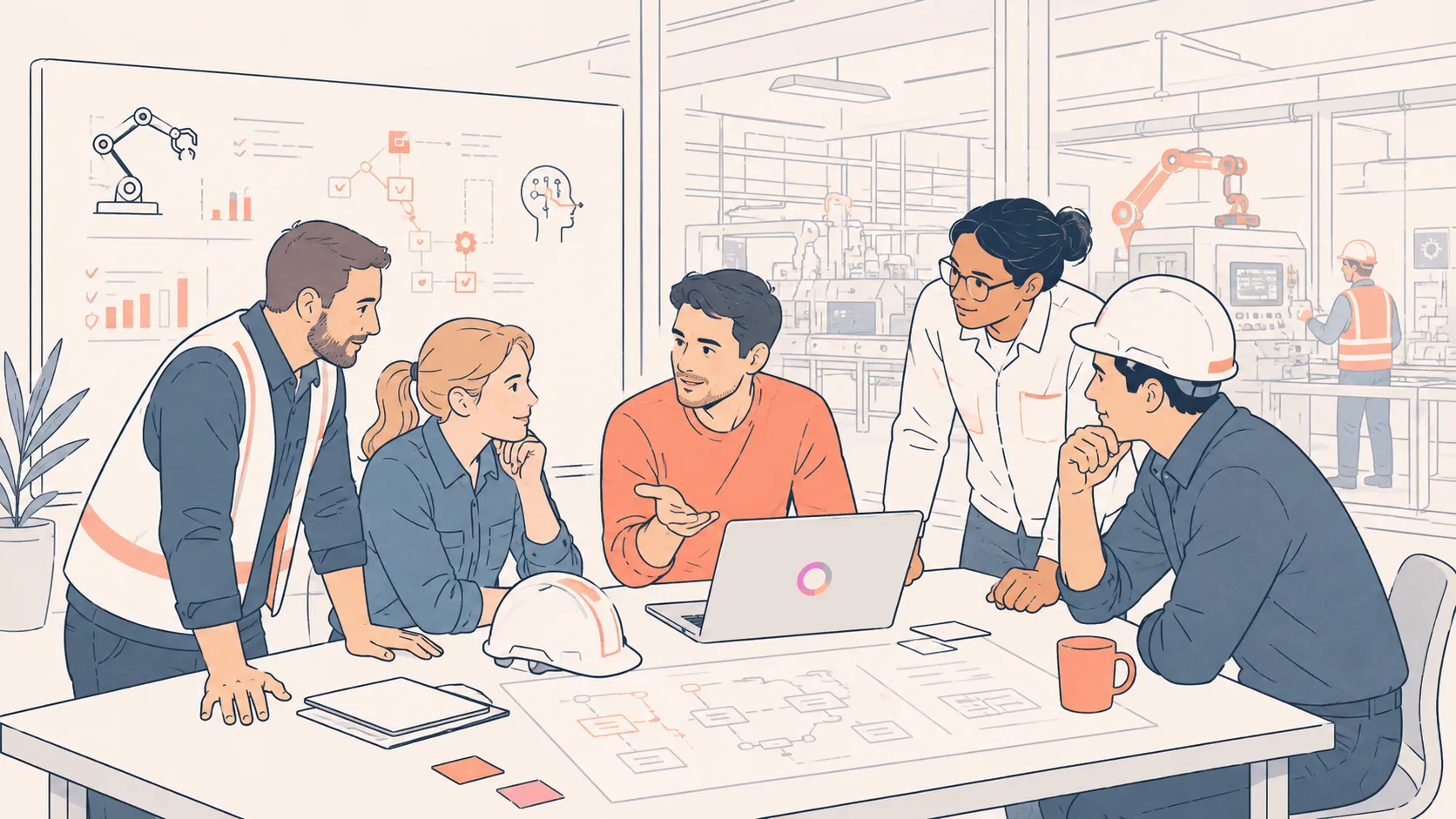 AI consulting is a fast growing part of AI labs’ business. Image: ChatGPT
Model companies are recognising that while they are involved in organisational transformation, they are at risk of being a passenger and are certainly not in the driver’s seat of this change. So they need to be the tool or platform of choice instead.
The deployment gap
If all of this is true, then it suggests that organisations that can achieve rapid, whole of org process change to realise AI within their business stand to have a competitive advantage. We can see this play out in the charts below.
Start with a fixed class of work and assume no change to the organisation around it. As base model capability improves, the economic value potential rises quickly. Once the task can be completed reliably, the economic value potential curve begins to flatten. A stronger model may still produce gains elsewhere, but it adds progressively less value to that particular task. 3
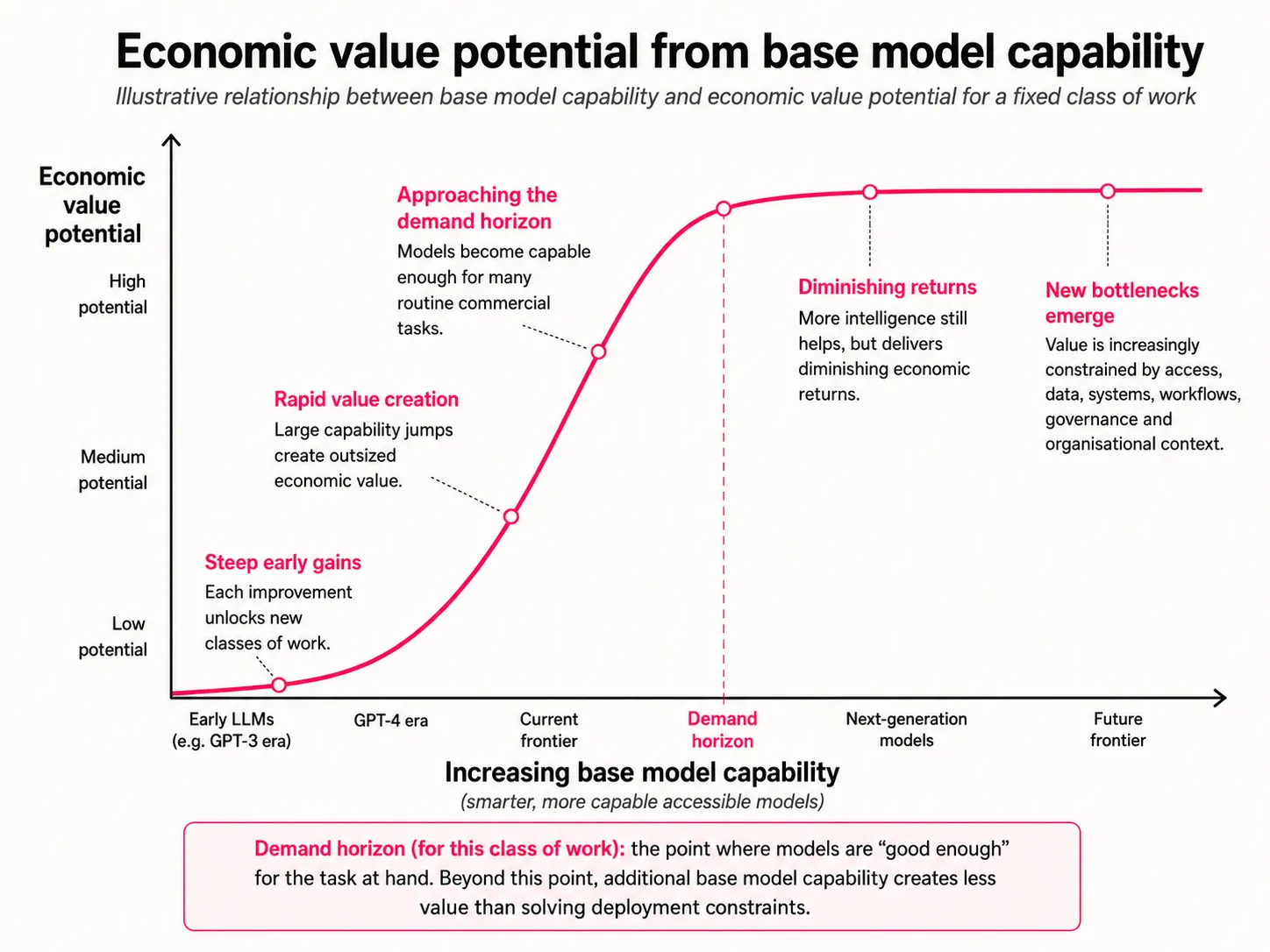 Economic value potential from base model capability for a fixed
class of work. Once a model can reliably meet that demand, further gains in
base model capability produce diminishing economic returns for that task.
Economic value potential from base model capability for a fixed
class of work. Once a model can reliably meet that demand, further gains in
base model capability produce diminishing economic returns for that task.
Base model capability is only the start. Once a model becomes available, it creates an initial level of economic value potential. Organisations can expand that potential by building effective AI systems around it: harnesses, evaluations, system access, context, automation and validation. Even when the base model improves slowly, the economic value potential of the wider system can continue to grow.
Realised organisational value follows a different path. It rises only as those systems are deployed into teams, workflows, decisions and operating models. The difference between the available economic value potential and the value the organisation has realised is the deployment gap.
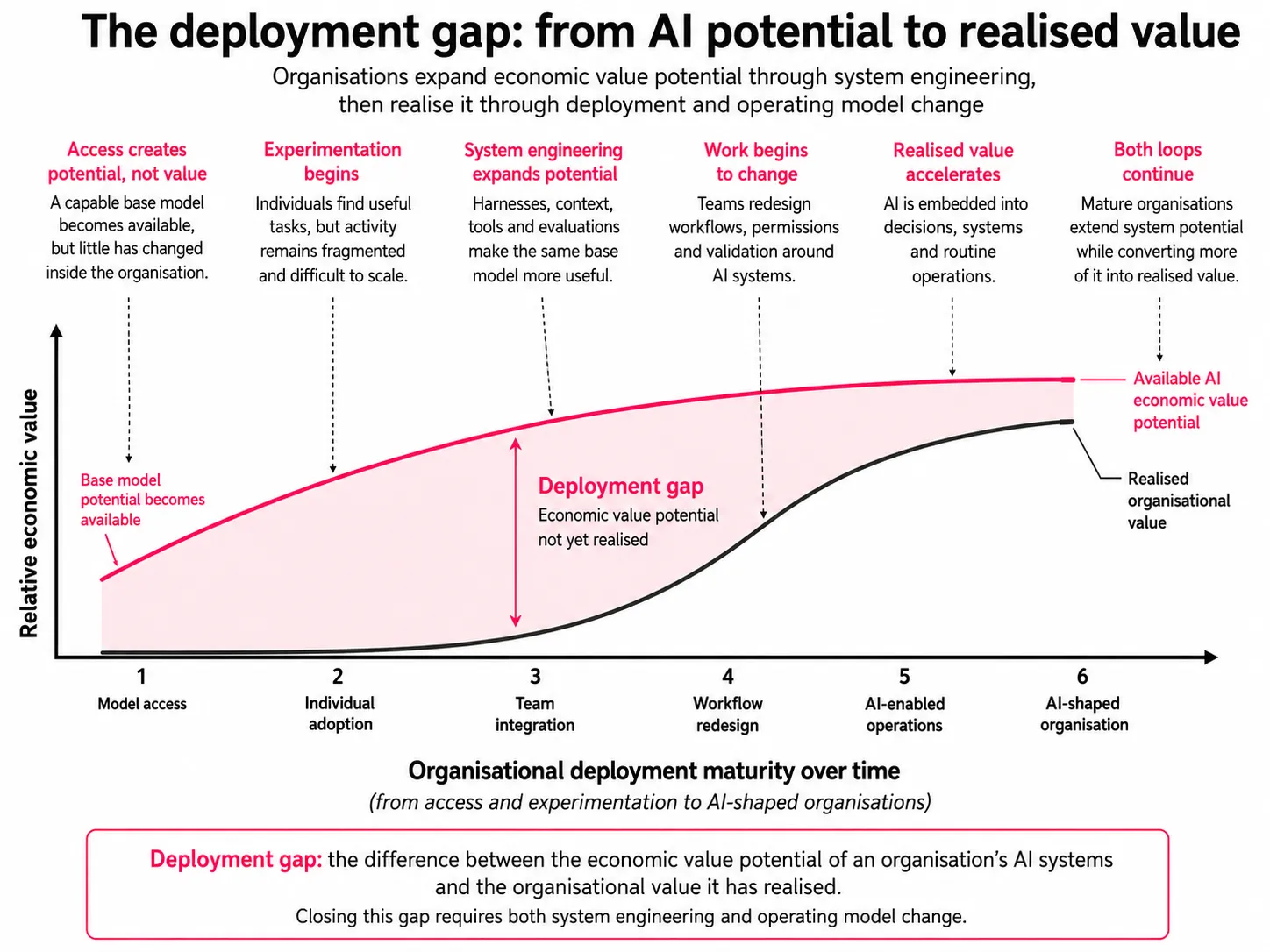 Economic value potential and realised organisational value across
deployment maturity. System engineering raises the available potential;
deployment and operating-model change convert it into realised value.
Economic value potential and realised organisational value across
deployment maturity. System engineering raises the available potential;
deployment and operating-model change convert it into realised value.
The current debate about whether AI is improving productivity illustrates the problem. Few organisations have progressed far enough through systems engineering, deployment and operating-model change to realise much of the economic value potential already available to them.
These activities reinforce each other. Organisations build systems to realise initial value, learn from deploying them, then use those lessons to improve the systems and expand the available potential further. Mature organisations run both loops continuously.
The deployment gap is the difference between the economic value potential of an organisation’s AI systems and the organisational value it has realised.
Closing that gap faster than competitors creates one source of advantage. Organisations that can also derive greater system capability from a comparatively limited base model gain a second. 4
Three organisational futures
The deployment gap already exists, and we’re now in a period where closing it becomes imperative for every organisation. Early movers are those that close the deployment gap fastest while continuing to extend their system capability.
Not all organisations are equally equipped to close this gap and have different opportunities and risks associated with them.
AI-native organisations
These orgs have been born in the AI era and have been designed assuming AI is critical to their operations. At their core, the businesses are designed around the concept of AI as computable labour and they adopt an AI-first operating model across every aspect of their business.
These organisations are regularly pushing their demand beyond the current limits of the capability horizon, knowing that what is not possible today may be operationalisable in a few months from now. As such, they continually operate close to the limit of what their AI systems can reliably do.
Their core discipline is about continuously building new harnesses around new and existing models, pushing their demand horizon outward and redesigning the business rapidly to absorb the result. This keeps their system capability advancing, while realised organisational value remains close behind.
Humans still exist in these organisations, but humans are in the organisation to provide guidance, judgement and accountability and they are significantly augmented by AI-enabled tools and agents to create exceptional operational leverage. These will be the first organisations to report revenue per employee in the hundreds of millions. 5
 AI-native teams will be small, nimble and highly leveraged. Image: ChatGPT
A model plateau may narrow the advantage gained from early access to frontier models, but it does not remove the advantage created through better harnesses, feedback loops and work systems. AI-native organisations may continue widening their lead even if they are stuck with static base models.
Their principal vulnerability is dependence on external frontier providers, whose access, pricing, safeguards or regulatory status could change abruptly.
This was evident in the Great Fable Switch Off of 2026 where businesses dependent on it quickly realised they were swimming naked and the tide went out.
Small and medium enterprises
In my view, these orgs have the most opportunity to be quiet winners. 6
These organisations usually have deep knowledge in a domain and command expertise within it. Proprietary data or access to a particular customer base is their superpower if it’s adequately utilised.
AI allows them to more readily leverage those assets by augmenting deep expertise with adjacent skills, allowing them to take on additional projects, drive transformation and scale without the proportional hiring typically needed to do this. AI can help scale operations, improve customer experience and build capabilities previously out of reach, such as enterprise-scale analytics and advanced decision support.
 SMEs commanding proprietary data or customers have much to gain. Image: ChatGPT
Most will not build these systems from scratch. Their advantage will come from combining increasingly capable horizontal and industry-specific tools with a small number of people who understand how to reshape the business around them.
The primary risk for small and medium enterprises remains what it always has been - access to capital and a willingness to deploy it. This extends to salaries for talented staff who can embed into the organisation and drive change. Historically, these organisations are fiscally conservative regarding investment and free cash is paramount. 7
For SMEs, a K-shaped path is likely the future. There will be those who embrace the technology to unlock innovation and transformation and become highly competitive, whilst those that lag become targets for PE roll-ups (particularly AI-native ones) who themselves leverage mature operational AI to streamline organisations and achieve scale through acquisition.
Legacy enterprise
These organisations represent the biggest, slowest moving businesses in our economy and already have the largest deployment gaps even against existing base model capabilities. When AI tools hit the mainstream, they were largely banned or restricted by IT. Where they have been rolled out, it’s only after significant governance oversight and access has been granted to the least capable tools due to convenience (eg Copilot).
As with the digital transformation that came before it 8, the opportunity that exists for these organisations is huge given the markets they command. Like always in big enterprise, unlocking the ability of the organisation to effect change without becoming hamstrung by process is the key tension needing to be addressed by leaders.
Across enterprise we’re already seeing unsustainable behaviour such as AI-theatre (deploying budget AI to all staff with minimal training) and endless pilots (various teams trying out use cases because executives want bragging rights on what they are doing to their golf-buddies). Worse is when this leads to ill-considered workforce reductions, “Because AI” such as Ford who have had to rehire workers when AI isn’t good enough.
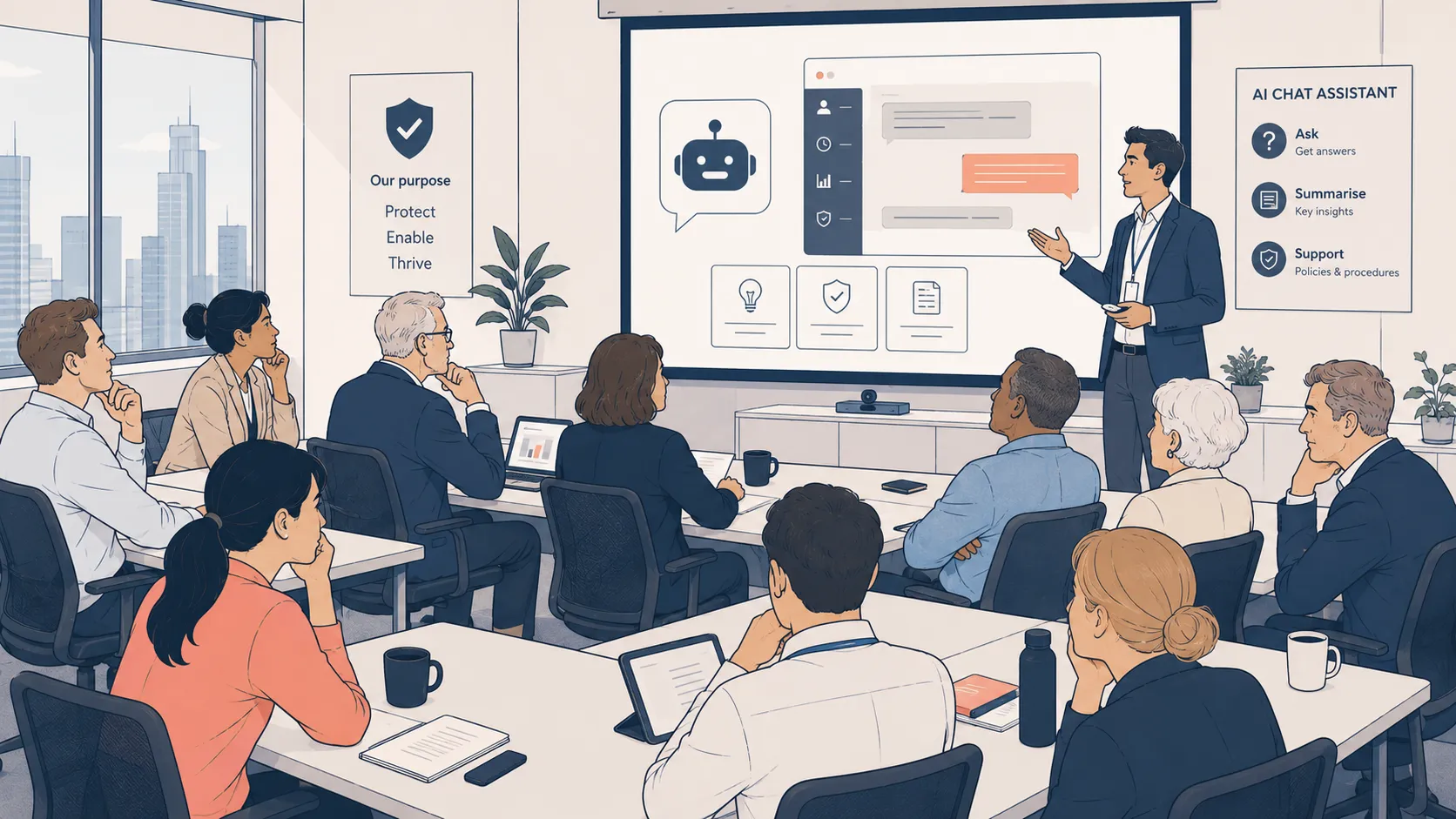 Enterprises needed to get past the basics quickly. Image: ChatGPT
The key for enterprise is to build on the areas already identified during digital transformation. This means simplifying operating models, reducing and streamlining organisational complexity and modernising systems (in particular - making them more accessible). From an AI transformation standpoint this means embedding highly capable AI enablement teams throughout the business and providing those teams with authority to deliver change aligned to pragmatic organisational standards and guardrails.
Large enterprises, more than any other, need to rethink and fundamentally redesign work systems rather than just automate tasks. Automation is important, but automation of organisational structures and flows of work that don’t map forward will simply create high speed chaos.
Redesigning processes around new capabilities to capture value isn’t new. The electrification of industry holds lessons here.
Early electrification often meant replacing a steam engine with an electric motor while preserving the factory layout designed around steam. This delivered some benefits, but the larger gains came when distributed motors allowed factories to reorganise machinery around production rather than power transmission. Enterprise AI faces the same trap. Substituting AI into existing roles will create some value, but redesigning the work system is where the economics change.
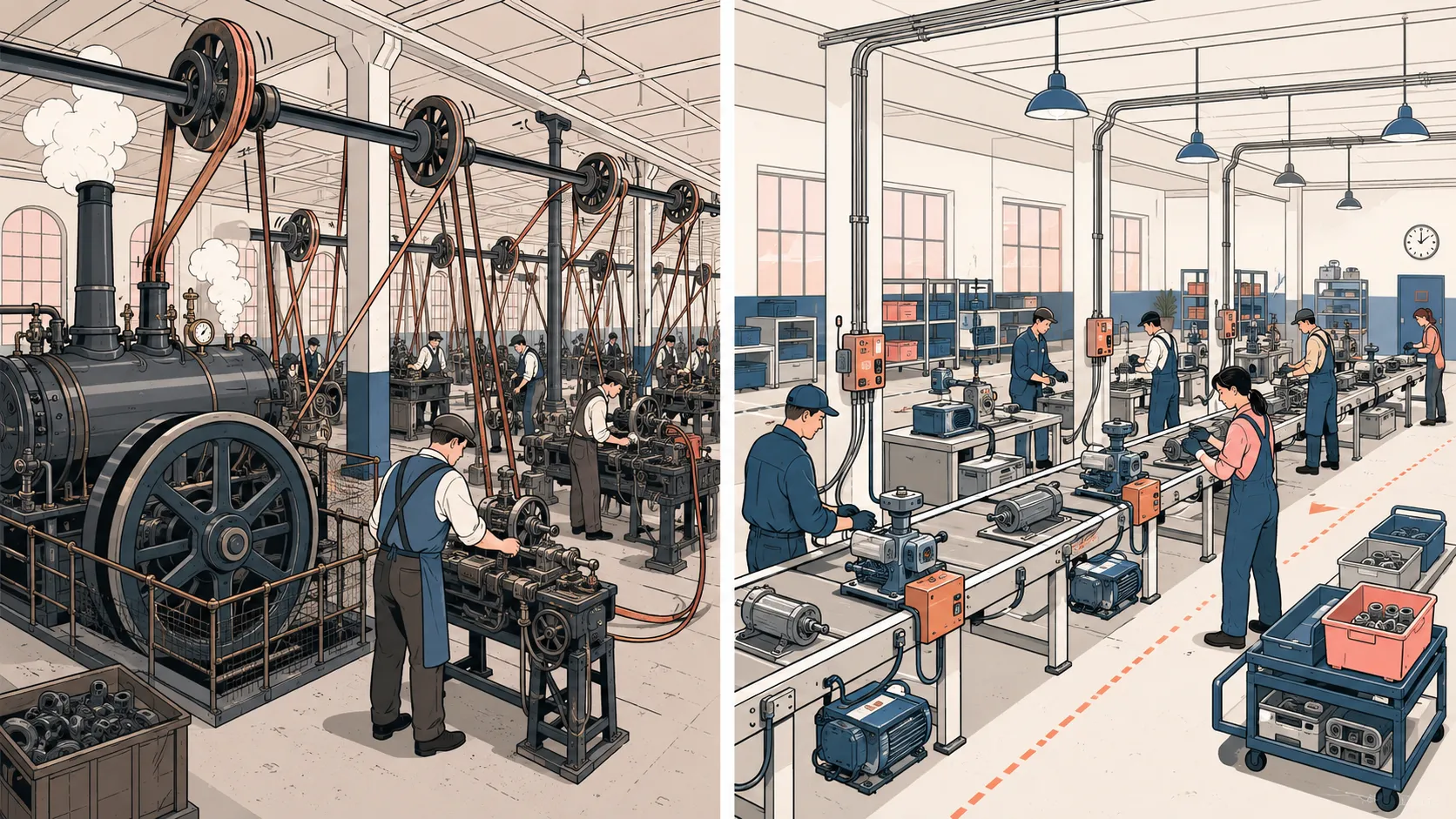 Electricity enabled orgs to redesign their processes. Image: ChatGPT
The organisational analogue is a forward-deployed engineering model used across the whole business, not confined to a single technology team.
These teams are embedded deeply into functional units to close local deployment gaps and convert system capability into realised organisational value. They do more than integrate models. They build the local harnesses, evaluations, system access and workflows that make AI reliable inside each domain by combining base model capability with domain context.
The Kodak moment
These archetypes represent different responses to a technology that is broadly available to all three. The risk for incumbents is not that they lack access to AI but that they fail to activate it.
We’ve seen this picture before. Kodak invented digital photography but failed to realise and commercialise it due to fear of cannibalisation of film. Nokia invented the smartphone and cameraphone but didn’t dedicate resources to develop it further.
Both case studies highlight how technology is rarely the problem, the design of an organisation matters far more in its ability to realise the benefit of that technology.
Organisations that underperform with regard to closing the AI deployment gap will find that they are accumulating AI deployment debt. Over time, this means being further behind the baseline expected of their industry, partners or customers and it becomes harder to do business and creates an exposure to sudden change such as Apple releasing the iPhone (Nokia) or retailers forced to close their stores during COVID without a Digital Commerce channel to support them.
Closing this deployment gap requires patience, a commitment to transformation and the allocation of resources to see it through.
The next decade belongs to deployment
The AI race doesn’t end with access to the best models. We’re either there or fast approaching that point.
Much of the next wave of economic value will not depend on another leap in model intelligence. It will come from organisations doing the hard, messy, grinding work of redesigning themselves around the intelligence already available.
Digital showed us what to expect next - that our organisations need to change to embrace new technology and re-engineer to leverage it in new ways. Organisations that slow-roll this phase of AI will accumulate considerable deployment debt that may later prove disruptive or existential.
The organisations that win will not simply rely on the base model capability available to them. They will build systems that extend it, create new demand for it and continuously convert expanding system capability into realised organisational value. They will do this faster than their competitors.
Acknowledgements
An early draft of this essay was reviewed by Hamish Songsmith, Mark Pesce and John Allsopp. Their feedback to refine this concept was invaluable. Claude and ChatGPT helped the editing process. I am responsible for any errors or misguided explanations.
Footnotes
-
Why employ a PhD mathematician to add up some numbers, when you can use a $1 calculator to get the same result instead. ↩
-
This is especially the case when you consider engineering skills and harnesses around lighter weight models to make them more reliable and repeatable for general use. ↩
-
Note that this is assessing a model against a given task. At the moment, we still see the jagged frontier in action so newer models create improvements in other domains that may be the incentive to adopt a newer model into the organisation. Regardless, the marginal economic value potential available from a stronger model for the original task has largely been exhausted. ↩
-
This is one reason organisations investing in proprietary systems around models may outperform peers using the same underlying models. ↩
-
Some AI-native businesses may still grow large workforces. The difference is that headcount will be less tightly coupled to output and revenue than it is in current organisations. ↩
-
This would be a welcome relief after being squeezed over the last decade by economic headwinds that have made running an SME extremely hard (but that is a whole other post). ↩
-
Managing cashflow in the age of AI can feel like shovelling money into an incinerator, but managed correctly it can be used to unlock new capabilities for the org and allow it to grow. ↩
-
Many enterprises spent a good two decades doing the minimal amount possible until COVID-19 upended their lacklustre digital strategies and showed how little they had achieved in true digital transformation of their businesses. ↩